
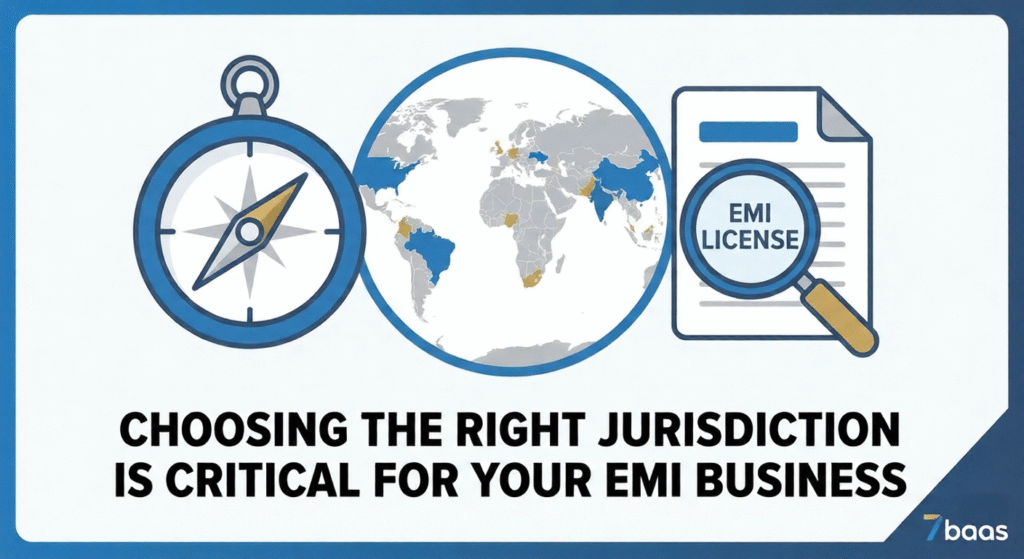
Launching an Electronic Money Institution (EMI) is a major strategic step, not just a regulatory one. At the center of this decision lies a crucial question: which jurisdiction for EMI license is the right fit for your business?
The jurisdiction you choose determines how your EMI will be regulated, how much it will cost to operate, how easily you can access banking partners, and how far you can scale in the future. Many fintech founders focus heavily on product development and technology, but underestimate how deeply the jurisdiction for EMI license shapes the success or failure of their business.
In today’s highly regulated financial environment, choosing the wrong jurisdiction can lead to delays, excessive compliance costs, and long-term operational limitations. Choosing the right one can provide clarity, credibility, and sustainable growth.
Why the Jurisdiction for EMI License Is a Strategic Business Decision
Selecting a jurisdiction for an EMI license goes far beyond deciding where a company is incorporated. It determines which regulatory authority oversees your operations, the standards you must comply with, and the level of scrutiny your business will face throughout its lifecycle.
The regulatory framework set by the chosen jurisdiction shapes how your EMI functions on a day-to-day basis and how it is perceived by banks, partners, and regulators worldwide. This single decision influences multiple critical areas of the business, including:
- Licensing approval timelines, which can range from a few months to over a year depending on regulatory complexity
- Capital and safeguarding requirements, affecting how much funding must be locked in to protect customer funds
- Compliance and reporting obligations, including AML, KYC, audits, and ongoing regulatory supervision
- Access to banking and payment partners, as financial institutions assess regulatory credibility before onboarding EMIs
- Market reach and scalability, determining whether cross-border services or future expansion are feasible
Once an EMI license is granted, relocating or re-licensing in another jurisdiction is rarely straightforward. It often involves shutting down existing structures, reapplying for authorization, renegotiating banking relationships, and rebuilding compliance frameworks. These transitions are not only expensive but can also disrupt operations and erode trust with customers and partners.
For this reason, the initial jurisdiction choice should be treated as a core strategic decision, not an administrative formality. Making the right choice early provides regulatory stability, operational efficiency, and a stronger foundation for long-term growth, while a poor choice can limit flexibility and slow progress at every stage of the EMI’s development.
Regulatory Framework Depends on the Jurisdiction for EMI License
One of the main reasons the jurisdiction for EMI license matters is the regulatory framework governing electronic money.
Some jurisdictions offer:
- Clear EMI-specific legislation
- Well-documented licensing procedures
- Regulators experienced in supervising fintech companies
Other jurisdictions may rely on outdated financial laws or apply banking-level regulations to EMIs, making compliance unnecessarily complex.
A strong regulatory framework provides:
- Predictability in regulatory expectations
- Consistent interpretation of rules
- Reduced regulatory uncertainty
Jurisdictions influenced by internationally recognized standards, such as the EU’s PSD2 framework, are often preferred because they offer clarity and global recognition.
License Approval Is Strongly Influenced by Jurisdiction for EMI License
Many EMI applications face delays or outright rejection not because the business idea lacks merit, but because it has been submitted in an unsuitable regulatory environment. Regulators do not assess applications in isolation; they assess whether a business model aligns with their jurisdiction’s risk appetite, regulatory capacity, and financial framework.
An EMI application is evaluated holistically. Regulators typically examine:
- Business model structure, including the type of electronic money services offered
- Risk exposure and transaction flows, such as volume, velocity, and cross-border activity
- Target markets and customer profiles, especially in relation to AML and financial crime risk
- Compliance readiness and governance, including internal controls, policies, and management expertise
If a regulator believes that an EMI’s operations exceed what their framework is designed to supervise, approval becomes difficult regardless of the quality of the application.
How the Jurisdiction Shapes Regulatory Decisions
Regulatory attitudes vary significantly across jurisdictions. Some authorities actively encourage fintech innovation and are familiar with modern payment models, digital wallets, and API-driven platforms. These regulators tend to apply proportionate requirements and engage constructively during the licensing process.
Others take a more conservative approach, applying strict standards originally designed for traditional financial institutions. In such environments, EMIs may face higher capital thresholds, longer approval timelines, and more intensive scrutiny.
Selecting a jurisdiction that aligns with the scale, complexity, and risk profile of your EMI can dramatically improve approval prospects. It reduces unnecessary regulatory friction, limits repeated information requests, and creates a smoother dialogue with the supervisory authority throughout the licensing process.
This is why jurisdiction assessment is a core element of professional EMI advisory services. Firms such as 7baas focus on evaluating regulatory fit before an application is submitted, helping businesses avoid jurisdictions where approval is unlikely or inefficient.
Making the right jurisdiction choice at the outset not only improves the likelihood of approval but also establishes a more stable and cooperative regulatory relationship for the life of the EMI.
Capital Requirements Vary by Jurisdiction for EMI License
Capital requirements are another major factor influenced by the jurisdiction for EMI license.
Depending on the regulator, an EMI may be required to:
- Maintain a high minimum paid-up capital
- Hold additional reserves based on transaction volume
- Meet ongoing capital adequacy thresholds
Excessive capital requirements can:
- Lock up funds needed for growth
- Limit investment in technology and compliance systems
- Reduce operational flexibility
A jurisdiction with proportionate capital requirements allows EMIs to remain financially viable while still meeting regulatory expectations. This balance is especially important for early-stage fintech companies.
Compliance Costs Are Defined by the Jurisdiction for EMI License
Compliance is not a one-time obligation. It is a continuous operational cost that depends heavily on the jurisdiction for EMI license.
Jurisdiction determines:
- Depth of AML and KYC checks
- Frequency of regulatory reporting
- Audit and inspection requirements
- Regulatory and supervisory fees
In some jurisdictions, compliance costs can become disproportionately high, placing pressure on cash flow and resources. In others, regulators apply a risk-based approach that aligns compliance requirements with the size and nature of the EMI.
Choosing the right jurisdiction ensures that compliance remains robust but manageable over the long term.
Banking Access Depends on Jurisdiction for EMI License
An EMI cannot operate without access to reliable banking and payment partners. Banks and payment processors conduct extensive due diligence before onboarding EMIs, and the jurisdiction for EMI license plays a major role in their decision-making.
Banks evaluate:
- The reputation of the regulator
- Jurisdictional risk ratings
- Enforcement history and regulatory oversight
EMIs licensed in weak or high-risk jurisdictions often face:
- Delayed bank account openings
- Higher onboarding scrutiny
- Sudden account closures or de-risking
A reputable jurisdiction improves trust with banks, card schemes, and payment networks, making it easier to establish and maintain critical partnerships.
Market Access and Expansion Depend on Regulatory Choice
The regulatory environment plays a decisive role in determining where and how an EMI can legally provide its services. It defines the geographic scope of operations, the permissions granted under the license, and the ease with which the business can expand beyond its initial market.
Not all jurisdictions provide the same level of operational flexibility. Some frameworks support growth across borders and facilitate regional expansion, while others impose strict geographic limitations that can make scaling more complex and resource-intensive.
How the Jurisdiction Affects Market Reach
Depending on the regulatory regime, certain jurisdictions allow EMIs to:
- Offer cross-border services without obtaining multiple additional licenses
- Access regional markets under harmonized regulatory frameworks
- Benefit from passporting rights, enabling operations across multiple countries through a single license
In contrast, other jurisdictions restrict EMIs to domestic activity only. In such cases, any attempt to expand internationally requires separate licensing processes, additional capital commitments, and new compliance frameworks for each market entered.
These restrictions can significantly increase both time and cost, slowing down expansion and diverting resources away from product development and customer acquisition.
Why Early Jurisdiction Choice Matters for EMI Expansion
For EMIs with regional or global ambitions, choosing the right jurisdiction at the outset is critical. A strategically selected jurisdiction can:
- Reduce regulatory barriers to expansion
- Minimize the need for repeated licensing applications
- Support scalable growth across multiple markets
- Provide regulatory credibility in new regions
By contrast, an unsuitable jurisdiction can limit growth potential and force costly restructuring later in the business lifecycle.
This is why market access considerations are a key part of professional EMI licensing advisory. Firms such as 7baas assess not only current regulatory requirements but also future expansion plans when advising on jurisdiction selection. More insight into this approach can be found through their EMI licensing services at
https://7baas.com/services/emi-licensing/
Ultimately, the right jurisdiction for EMI license transforms regulatory compliance from a barrier into a strategic enabler of growth, allowing EMIs to expand with confidence and efficiency.
Reputation and Investor Confidence Depend on Jurisdiction for EMI License
Investors and institutional partners look closely at regulatory credentials.
They want to know:
- Which authority supervises the EMI
- How credible the jurisdiction is internationally
- Whether the regulatory framework is stable
A strong jurisdiction:
- Simplifies investor due diligence
- Builds confidence in governance and risk controls
- Enhances long-term valuation
A weak or obscure jurisdiction can raise concerns, even if the business model and technology are solid.
Regulatory Attitude Toward Innovation
Not all regulators approach fintech innovation in the same way.
Some jurisdictions:
- Support regulatory sandboxes
- Understand digital-first business models
- Adapt rules to new payment technologies
Others:
- Apply rigid, traditional banking regulations
- Slow down product innovation
- Restrict new payment features
Choosing a jurisdiction for EMI license with a forward-looking regulatory mindset allows businesses to innovate while remaining compliant.
Long-Term Stability of the Regulatory Environment
An EMI license represents a long-term commitment, making the stability of the regulatory environment a crucial consideration. The right environment ensures predictable operations and supports sustainable growth.
When evaluating potential jurisdictions, it is important to consider:
- Political and economic stability, which affects regulatory enforcement and business continuity
- Consistency in regulatory requirements, reducing the need for frequent adjustments
- Predictability of policy changes, helping plan compliance and operational strategy
Frequent shifts in regulations can result in unexpected compliance costs, operational disruptions, or even the need to restructure business operations. A stable regulatory environment allows EMIs to focus on growth, innovation, and market expansion rather than constantly reacting to changing rules.
Why the Right Jurisdiction Matters for EMI Scalability
Scalability in an EMI business depends on more than just technology or customer demand. Regulatory alignment plays a crucial role in determining how quickly and efficiently an EMI can grow.
Choosing a supportive jurisdiction can:
- Handle increasing transaction volumes without triggering additional regulatory hurdles
- Enable product expansion, allowing new services to be launched smoothly
- Facilitate partnerships with global banks, payment processors, and fintech providers
- Reduce barriers to growth, including cross-border operational restrictions
Conversely, an unsuitable jurisdiction can impose structural limitations, making expansion difficult, expensive, and time-consuming to correct. Early strategic alignment with a regulatory environment that supports growth ensures that your EMI can scale confidently and sustainably.
The Importance of Expert Guidance in Choosing Jurisdiction for EMI License
Selecting the jurisdiction for EMI license requires more than online research. It demands regulatory insight, compliance expertise, and market experience.
Professional advisors evaluate:
- Business model compatibility
- Regulatory expectations
- Capital efficiency
- Banking feasibility
This is where specialized EMI licensing support becomes valuable. Services such as those provided by 7baas help align an EMI’s operational goals with the most suitable regulatory environment, reducing risk and improving long-term outcomes.
Global Regulatory Benchmarks and Oversight
International regulatory bodies influence EMI standards worldwide. Institutions such as the European Central Bank play a key role in shaping electronic money regulation and payment services oversight.
Final Thoughts: Jurisdiction for EMI License Defines Your EMI’s Future
Choosing the jurisdiction for EMI license is not an administrative task. It is a strategic decision that defines how your EMI operates, grows, and is perceived globally.
The right jurisdiction supports:
- Licensing success
- Manageable compliance
- Banking access
- Market expansion
- Investor confidence
For any serious fintech founder, choosing the right jurisdiction for EMI license is critical to building a compliant, scalable, and sustainable EMI business.
Frequently Asked Questions (FAQs)
1. What is a jurisdiction for EMI license?
A jurisdiction for EMI license refers to the country or regulatory authority where an Electronic Money Institution (EMI) is authorized to operate. It defines the rules, compliance requirements, and permissions the EMI must follow.
2. Why is choosing the right jurisdiction for EMI license important?
Selecting the right jurisdiction impacts licensing approval, compliance costs, access to banking partners, market expansion, and long-term business stability. A poor choice can limit growth and increase operational challenges.
3. How do capital requirements vary by jurisdiction for EMI license?
Different jurisdictions set varying minimum capital thresholds, reserve requirements, and ongoing capital adequacy rules. Choosing a jurisdiction with proportionate requirements ensures financial viability while meeting regulatory obligations.
4. Can the jurisdiction for EMI license affect banking partnerships?
Yes. Banks and payment processors assess the regulatory credibility of an EMI based on its jurisdiction. A reputable jurisdiction simplifies bank onboarding and helps establish trust with global financial partners.
5. Does jurisdiction choice impact international expansion for EMIs?
Absolutely. Some jurisdictions offer cross-border rights or passporting opportunities, while others restrict operations to domestic markets. Choosing the right jurisdiction early can reduce future regulatory hurdles and expansion costs.