
In Canada’s highly regulated financial services sector, MSB registration is more than a legal formality. It is a critical step that ensures your business operates legally, safely, and credibly.
A Money Services Business (MSB) includes companies involved in money transmission, foreign exchange, cheque cashing, and virtual currency services. Any business offering these services must register with the Financial Transactions and Reports Analysis Centre of Canada (FINTRAC).
Proper MSB registration protects your business from fines, legal penalties, and operational disruptions. Beyond compliance, it establishes trust with clients, investors, and financial institutions.
This guide will take you through everything you need to know about MSB registration in Canada, including who needs it, the registration process, federal and provincial requirements, common mistakes to avoid, and the benefits of staying compliant.
What Is MSB Registration in Canada?
MSB registration in Canada is the formal process of registering your business as a Money Services Business with the Financial Transactions and Reports Analysis Centre of Canada (FINTRAC). FINTRAC is the federal agency responsible for monitoring financial transactions, preventing money laundering, and ensuring businesses comply with anti-terrorist financing (ATF) laws.
A Money Services Business (MSB) typically includes companies that provide financial services such as:
- Money transmission – transferring funds on behalf of clients, whether within Canada or internationally.
- Foreign exchange services – buying or selling foreign currency, including both physical cash and electronic transfers.
- Cheque or money order cashing – offering cheque cashing, money order processing, and other payment instrument services.
- Virtual currency services – trading, transferring, or exchanging cryptocurrencies such as Bitcoin, Ethereum, and other digital assets.
Completing MSB registration ensures that your business is legally recognized under Canadian law. Once registered, your company must comply with federal regulations, which include implementing a comprehensive AML/ATF compliance program, maintaining accurate and organized transaction records, and submitting required reports to FINTRAC on time.
A strong compliance program does more than meet legal obligations. It helps your business detect and mitigate risks related to money laundering, fraud, and other financial crimes. It also sets a standard for accountability, ensuring that all staff understand their roles and responsibilities and adhere to regulatory requirements.
Failing to register as an MSB or neglecting ongoing compliance can have serious consequences. Unregistered businesses risk fines, legal penalties, operational restrictions, or even suspension of activities. Additionally, businesses without proper registration may face difficulties accessing banking services, forming partnerships, or earning the trust of clients and investors.
By completing MSB registration in Canada, your business gains more than legal compliance. It builds credibility, demonstrates a commitment to ethical operations, and positions your company for sustainable growth in the competitive financial services sector.
Key Responsibilities After MSB Registration
Once your business has completed MSB registration in Canada, it becomes subject to several regulatory obligations. Compliance is not just a one-time requirement—it is an ongoing process that ensures your business operates legally, protects clients, and mitigates financial risks.
AML/ATF Compliance Program
Every registered MSB must establish and maintain a written AML/ATF compliance program. This program is the backbone of your regulatory obligations and is designed to detect, prevent, and manage risks related to money laundering and terrorist financing.
Key elements of an AML/ATF compliance program include:
- Customer Due Diligence (CDD): Verifying the identity of clients before providing services, ensuring you understand who you are transacting with.
- Risk Assessments: Regularly analyzing your business operations to identify and mitigate potential vulnerabilities to financial crime.
- Monitoring Suspicious Activities: Keeping an eye on unusual or high-risk transactions that may indicate money laundering or other illegal activity.
- Internal Controls: Creating clear procedures, approvals, and reporting mechanisms to ensure the compliance program is effective and enforceable.
A well-implemented AML/ATF compliance program not only meets legal requirements but also strengthens your business reputation by demonstrating your commitment to ethical and transparent operations.
Record-Keeping
Accurate and organized record-keeping is another critical responsibility after MSB registration. MSBs are required to maintain detailed records of:
- All financial transactions processed
- Customer identification and verification information
- Internal compliance activities, including audits and risk assessments
These records must be stored securely and made available for FINTRAC inspections if requested. Proper documentation helps your business demonstrate compliance, facilitates audits, and ensures accountability throughout your organization.
Reporting Transactions
Registered MSBs must report specific financial activities to FINTRAC in a timely manner. Common reporting obligations include:
- Large cash transactions: Any cash deposits exceeding CAD 10,000
- International money transfers: Cross-border transactions that meet reporting thresholds
- Suspicious transactions: Activities that appear unusual, inconsistent, or potentially linked to criminal activity
Timely and accurate reporting is critical. Failing to report transactions properly can result in penalties, fines, or operational restrictions, emphasizing the importance of a structured compliance program.
Staff Training
Employees play a crucial role in ensuring that your business maintains ongoing compliance. After MSB registration, all staff members should receive regular training on AML/ATF policies, internal controls, and reporting procedures.
Effective staff training ensures that:
- Employees understand their responsibilities under Canadian law
- Suspicious transactions are identified and escalated appropriately
- The business maintains a culture of compliance and accountability
Regular training, coupled with clear internal procedures, reduces operational risks and ensures that your MSB remains fully compliant with federal regulations.
By fully implementing these key responsibilities, your business not only meets regulatory requirements but also enhances operational efficiency, builds credibility, and protects itself from financial and legal risks. Proper compliance is a cornerstone of a successful and trustworthy MSB in Canada.
Who Needs MSB Registration in Canada?
Not every financial services business requires MSB registration. The businesses that typically need it include those that:
- Handle money transmission for clients
- Exchange foreign currency or virtual currencies
- Cash cheques or money orders
- Offer prepaid access or stored-value products
If your business handles other people’s money or acts as an intermediary in financial transactions, MSB registration is likely required.
For detailed professional guidance, visit 7BaaS to confirm whether your business falls under MSB regulations.
Why MSB Registration Is Important
Legal Compliance
Registering as an MSB ensures that your business adheres to Canadian federal regulations under the Proceeds of Crime (Money Laundering) and Terrorist Financing Act (PCMLTFA). Operating without registration can lead to severe fines, legal penalties, or potential shutdowns.
Builds Credibility
Clients and investors trust registered MSBs more than unregistered businesses. Completing MSB registration demonstrates professionalism, accountability, and ethical business practices.
Access to Banking Services
Financial institutions often require MSB registration before providing accounts or payment processing services. Registration simplifies these processes and opens doors to partnerships with banks and fintech companies.
Risk Management
A formal AML/ATF compliance program helps detect and prevent fraud, money laundering, and terrorist financing. This reduces operational risk and protects your business reputation.
Step-by-Step Process for MSB Registration in Canada
Step 1: Determine If Your Business Is an MSB
Review your business activities carefully to confirm whether they fall under FINTRAC’s MSB definition. Typical services include money transmission, foreign exchange, cheque cashing, and virtual currency transactions.
Step 2: Appoint a Compliance Officer
Every MSB must designate a compliance officer. Responsibilities include:
- Implementing and monitoring the AML/ATF compliance program
- Ensuring staff are trained on regulatory requirements
- Reporting suspicious transactions to FINTRAC
Step 3: Develop a Written AML/ATF Compliance Program
A comprehensive compliance program must include:
- Risk assessments
- Customer identification and verification (KYC)
- Record-keeping protocols
- Transaction monitoring and reporting procedures
- Regular staff training
Step 4: Register With FINTRAC
MSB registration is completed online through the FINTRAC MSB registration portal. You must provide:
- Business and ownership details
- Service types offered
- Compliance officer information
Remember to update your registration whenever there are significant changes to your business structure or operations.
Step 5: Comply With Provincial Requirements
Some provinces require additional licensing or permits for money services businesses. Review provincial regulations to ensure full compliance in all locations where your business operates.
MSB Registration vs. Provincial Licensing
Federal registration with FINTRAC ensures compliance under AML/ATF laws. However, some provinces also require additional licensing.
- MSB Registration (FINTRAC): Federal requirement for all MSBs
- Provincial Licensing: Required in certain provinces to legally provide money services
Services like 7BaaS MSB Registration Services can help businesses navigate both federal and provincial requirements efficiently.
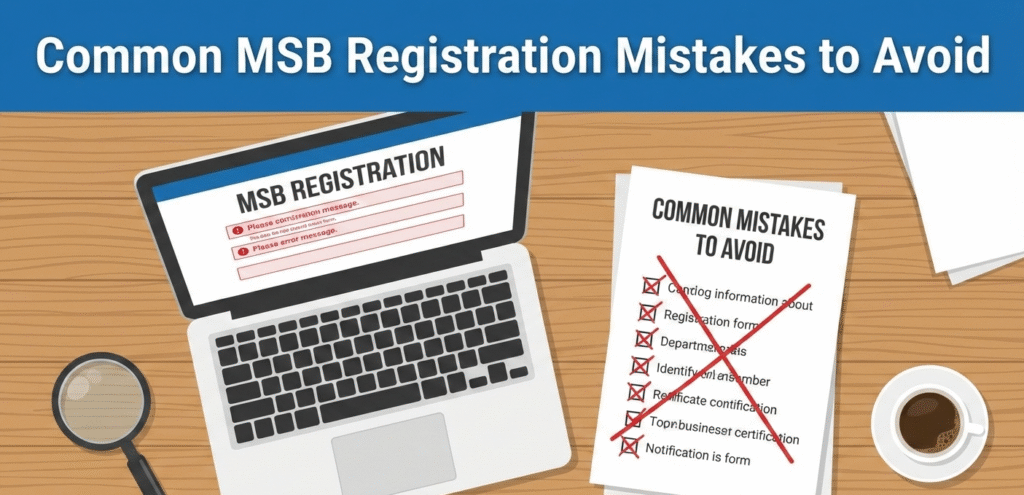
Common MSB Registration Mistakes to Avoid
- Filing without a complete AML/ATF compliance program
- Misclassifying your business activities
- Ignoring provincial licensing requirements
- Submitting incorrect or incomplete business information
- Failing to update registration after changes in operations
Avoiding these mistakes ensures a smooth registration process and reduces regulatory risk.
Costs and Considerations
The cost of MSB registration in Canada depends on the approach:
- DIY Registration: Low cost but higher risk of errors
- Professional Services: Includes federal registration, provincial licensing, and compliance program setup
- Full Compliance Packages: Comprehensive solutions with ongoing reporting, staff training, and monitoring
Professional guidance saves time, reduces risk, and ensures full compliance.
Benefits of MSB Registration in Canada
| Benefit | Description |
|---|---|
| Legal Protection & Compliance | Ensures your business complies with Canadian financial laws, reducing the risk of fines, penalties, or shutdowns. |
| Enhanced Credibility & Trust | Builds confidence with clients, investors, and partners by demonstrating professionalism and ethical operations. |
| Easier Access to Banking Services | Simplifies opening accounts, payment processing, and partnerships with banks and fintech companies. |
| Operational Efficiency | Structured compliance programs improve internal processes, record-keeping, and reporting. |
| Scalability Across Provinces | Enables business expansion into multiple provinces while staying fully compliant with regulations. |
FINTRAC Reporting Obligations
Registered MSBs must report specific financial transactions to FINTRAC:
- Large cash transactions exceeding CAD 10,000
- Suspicious transactions
- Electronic funds transfers
- Cross-border transactions
Accurate record-keeping and timely reporting are essential for compliance. For international AML standards, see the Financial Action Task Force (FATF).
How 7BaaS Simplifies MSB Registration
7BaaS MSB Registration Services helps businesses navigate the registration process with ease, including:
- Federal MSB registration support
- Provincial licensing assistance
- AML/ATF compliance program setup
- Ongoing monitoring and compliance updates
- Expert guidance throughout the process
Partnering with professionals ensures your business stays compliant, avoids regulatory issues, and can grow confidently.
Conclusion
MSB registration in Canada is essential for any business handling money or financial instruments for clients. It ensures legal compliance, strengthens credibility, improves access to banking services, and lays a strong foundation for business growth.
By understanding federal and provincial requirements, implementing a robust compliance program, and seeking professional guidance, businesses can operate responsibly, confidently, and efficiently.
Proper MSB registration is not just a regulatory necessity—it is a strategic advantage that allows Canadian financial services businesses to thrive in a competitive and highly regulated market.
FAQs About MSB Registration in Canada
Q1: What is MSB registration in Canada?
A: MSB registration in Canada is the official process of registering your business as a Money Services Business with FINTRAC. It ensures your business complies with federal laws regarding money laundering, terrorist financing, and financial reporting.
Q2: Who needs to register as an MSB?
A: Any business that provides services like money transmission, foreign exchange, cheque or money order cashing, or virtual currency transactions must register. If your business handles client funds in these ways, registration is mandatory.
Q3: How do I register my business as an MSB?
A: Registration is done online through the FINTRAC portal. You must provide details about your business, services offered, ownership structure, and appoint a compliance officer responsible for AML/ATF compliance.
Q4: Is MSB registration the same as provincial licensing?
A: No. MSB registration is a federal requirement under FINTRAC. Some provinces may also require additional licenses to operate legally. Both federal and provincial compliance are important for full legal coverage.
Q5: What are the consequences of not registering as an MSB?
A: Operating without MSB registration can result in fines, legal penalties, restrictions on business operations, or suspension of activities. Unregistered businesses may also face difficulties accessing banking services or forming trusted partnerships.