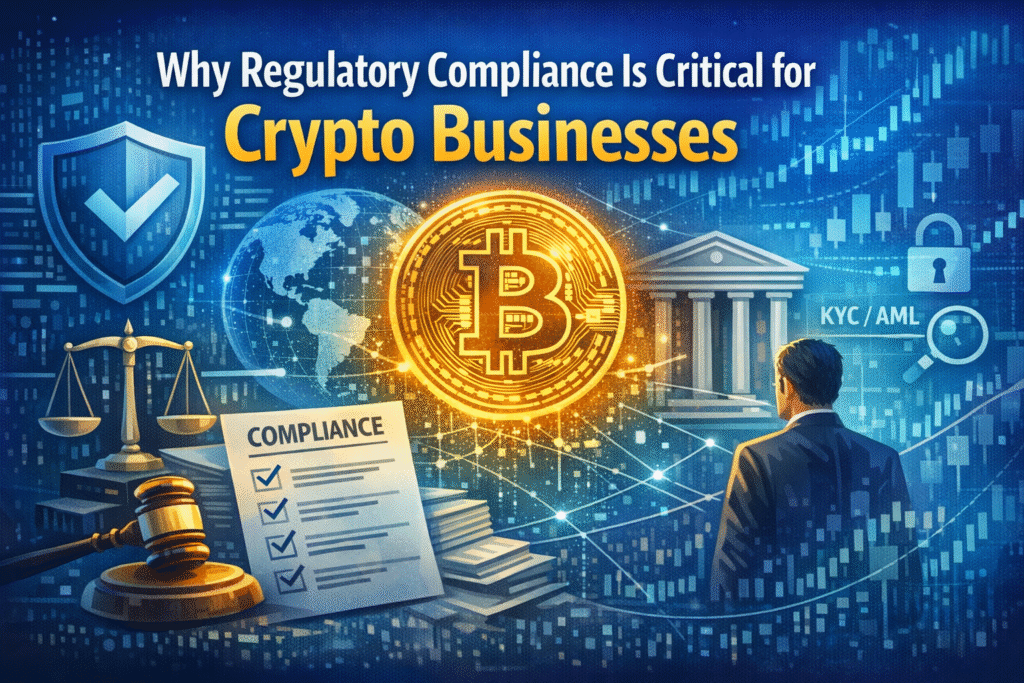
In the fast-growing cryptocurrency sector, regulatory compliance for crypto businesses is no longer optional—it’s a business imperative. From legal risks to cybersecurity challenges, non-compliance can lead to fines, reputational damage, or even business closure.
At 7baas, we help crypto companies navigate complex regulations, ensuring their operations remain secure, legitimate, and growth-ready. Learn more about our Insights to stay informed about the latest crypto regulations.
What Does Regulatory Compliance Mean in Crypto?
Regulatory compliance involves following the rules, laws, and standards that govern cryptocurrency activities. Key aspects include:
- Anti-Money Laundering (AML) protocols
- Know Your Customer (KYC) processes
- Data privacy and security standards
- Financial reporting and licensing requirements
Complying with these frameworks helps protect your business, ensures transparency, and builds trust with clients and partners.
For expert guidance on setting up compliant operations, visit our Services page.
Why Regulatory Compliance is Vital for Crypto Businesses
1. Legal Protection
Operating without compliance exposes crypto businesses to legal penalties, fines, and potential shutdowns. Regulatory compliance for crypto businesses ensures adherence to local and international laws, safeguarding the company against legal risks.
2. Building Customer Trust
Customers prefer platforms that prioritize security and transparency. Implementing KYC and AML measures not only protects users but also enhances credibility, making it easier to attract investors and clients.
3. Enhancing Reputation
Reputation is critical in the crypto ecosystem. Regulatory violations can severely damage public perception. Businesses that adhere to compliance standards position themselves as trustworthy and professional, crucial for long-term growth.
4. Access to Financial Services
Banks and payment processors are more willing to collaborate with compliant crypto businesses. Following proper regulations ensures smoother access to financial infrastructure, global transactions, and investor networks.
5. Reducing Fraud and Risk
Strict compliance reduces exposure to fraud, scams, and cyber threats. Businesses that enforce regulatory measures safeguard their clients’ assets while maintaining operational integrity.
How to Ensure Compliance in Crypto
Understand Local and Global Regulations
Research the rules in your country and international frameworks. Authoritative sources include FATF and FinCEN.
Implement Strong KYC and AML Protocols
Verify client identities and monitor transactions for suspicious activity. This is critical for regulatory compliance in crypto businesses.
Conduct Regular Audits
Internal and external audits ensure compliance with regulations and allow proactive correction of gaps.
Train Employees
Educate your team on crypto regulations, compliance best practices, and operational risks.
Seek Professional Guidance
Consult experts to navigate licensing, registration, and regulatory requirements. Learn how 7baas supports crypto businesses in achieving full compliance.
| Compliance Area | Simple Step to Take | Why It Matters (Simple Explanation) |
| Know Your Customers (KYC) | Check Everyone’s ID | You must confirm the real identity of every user (like checking a driver’s license) to stop bad actors and criminals. |
| Stop Money Laundering (AML) | Watch All Transactions | Use a system that constantly checks money movements for anything suspicious, like big, fast transfers or unusual patterns. |
| Legal Permissions | Get the Right Licenses | Depending on where you operate, you need official permission (licenses) from the government to run your crypto business legally. |
| Sanctions & Restricted Areas | Check Global ‘Blacklists’ | You must check user names and wallets against lists of terrorists and sanctioned people/countries (like OFAC) to ensure you are not dealing with prohibited groups. |
| Data Security | Protect Customer Data | Keep all personal information safe and secret using strong encryption. Follow privacy laws like GDPR to avoid huge fines. |
| Protecting Users | Be Clear and Fair | Clearly explain the risks of crypto and your fees to users. Have an easy way for people to complain and solve their problems quickly. |
| Internal Rules | Appoint a Compliance Leader | Hire one person (the Compliance Officer) to be in charge of making sure all these rules are followed every day. |
| Train Your Team | All employees must be trained regularly on how to spot illegal activity and follow your internal rules. |
Internal Resources You Can Explore
- Learn about 7baas and our mission
- Contact us for compliance guidance at Contact Us
- Discover our Services tailored for crypto licensing and regulatory support
Conclusion
Regulatory compliance for crypto businesses is more than a legal requirement—it’s a foundation for growth, trust, and sustainability. By adhering to KYC, AML, licensing, and reporting standards, crypto businesses can protect clients, enhance reputation, and access financial networks worldwide.
Start your journey toward compliant crypto operations with 7baas. Our expert team ensures your business stays secure, regulated, and ready for global expansion.